


PROPER PIG PEN CLEANING AND DISINFECTION PROCEDURE TO PREVENT DISEASE OUTBREAKS
Why is Regular Cleaning and Disinfection of Pig Pens Necessary?
In modern pig farming, housing facilities are not only living spaces for livestock but also a key factor determining herd health and farm profitability.
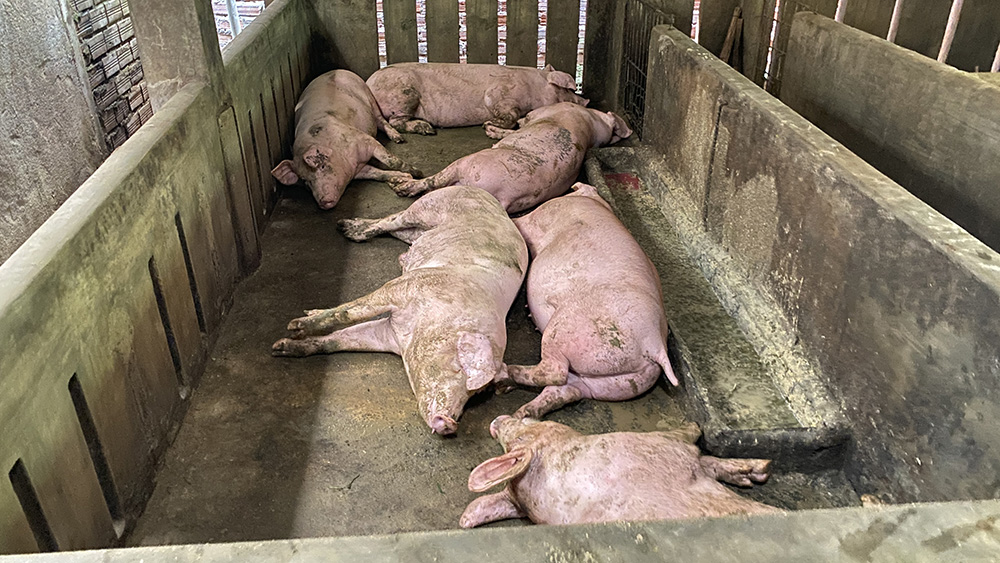
If pig pens are not cleaned regularly, manure, urine, leftover feed, and organic matter will accumulate, creating an ideal environment for bacteria, viruses, and fungi to develop.
This significantly increases the risk of dangerous diseases such as African Swine Fever (ASF), Porcine Reproductive and Respiratory Syndrome (PRRS), Foot-and-Mouth Disease, Mycoplasma pneumonia, and various digestive disorders.
Therefore, implementing a proper pig pen cleaning and disinfection procedure is essential to reduce pathogen pressure, protect animal health, and improve production efficiency.

Benefits of Regular Pig Pen Cleaning
Routine cleaning and disinfection provide several important benefits:
- Reduces the number of bacteria, viruses, and fungi in the environment.
- Limits disease transmission between pig herds.
- Lowers treatment costs and mortality rates.
- Improves growth performance and feed efficiency.
- Reduces odor and improves farm hygiene.
- Enhances biosecurity effectiveness in livestock farms.
Importance of Proper Cleaning for Effective Disinfection
Many farmers focus on using disinfectants but overlook the importance of proper cleaning.
In reality, the effectiveness of disinfectants largely depends on how clean the pig pen is before application.
Manure, leftover feed, dust, and organic matter not only harbor pathogens but also reduce the contact efficiency of disinfectants.
Therefore, sweeping and washing the pen with water or soapy water is always the first step in the cleaning process.
However, mechanical cleaning only removes most visible dirt and reduces pathogen load in the environment.
To effectively eliminate remaining bacteria, viruses, and fungi on floors, partitions, equipment, and surrounding areas, proper disinfectants must be used according to instructions.
In other words, cleaning is the foundation, while disinfection is the final step that completes the disease prevention process and strengthens farm biosecurity.
Practical Evidence of the Effectiveness of Cleaning Pig Pens
The importance of pig pen hygiene has been demonstrated through various field studies in pig farming.
An experiment was conducted on two neighboring pig farms under similar conditions, both continuously operating without herd replacement for 2.5 years.
Pigs were monitored from 30 kg to a market weight of around 90 kg.
On the first farm, pig pens were thoroughly cleaned and washed with soapy water before introducing a new batch of pigs.
In contrast, the control farm did not clean the pens after the previous batch and immediately introduced new pigs.
Results showed that pigs raised in the cleaned pens reached 90 kg about 9 days earlier than those in the uncleaned pens.
This was attributed to higher pathogen loads in the unclean environment, including airborne contamination, waste residues, and flooring surfaces.
The most common diseases observed were Mycoplasma pneumonia and colitis.
These findings demonstrate that proper pig pen cleaning helps reduce pathogen pressure, improve animal health, and enhance growth performance.
However, optimal disease prevention requires combining cleaning with regular disinfection programs to eliminate remaining pathogens in the environment.
Proper Technical Procedure for Pig Pen Cleaning and Disinfection
Step 1: Remove Waste and Contaminants
Thoroughly clean and remove:
- Pig manure
- Leftover feed
- Old bedding materials
- Dust and debris on floors and walls
This step significantly reduces pathogen load before disinfection.
Step 2: Wash with Water and Soap
Use a pressure washer to clean:
- Floors
- Walls and partitions
- Feeders
- Drinkers
- Equipment
Always wash from top to bottom to remove all organic matter effectively.
Step 3: Dry the Pen
After washing, allow the pen to dry naturally for 12–24 hours.
A dry environment allows disinfectants to work more effectively when applied.
Step 4: Apply Disinfectant
Spray evenly across all surfaces:
- Floors
- Walls
- Walkways
- Entrance areas
- Equipment and tools
Ensure complete coverage of all surfaces requiring disinfection.
Step 5: Downtime Before Restocking
After disinfection, leave the pen empty for 3–7 days to break the life cycle of remaining pathogens in the environment.
Farmers can learn more and explore related products here. See more: …
The Role of Farmers in Disease Prevention
Not only the environment but also humans can be major carriers of disease in pig farming.
Studies show that after handling diarrheal outbreaks in pigs, a worker’s hands and clothing can carry 15–20 billion pathogenic bacteria.
Meanwhile, only 0.5–3 million bacteria are enough to cause diarrhea in healthy piglets.
Therefore, strict biosecurity measures must be followed:
- Wash hands regularly with soap
- Change protective clothing frequently
- Disinfect footwear before entering livestock areas
- Restrict access for visitors
- Separate housing zones by pig groups
Common Mistakes in Pig Pen Disinfection
Many farms still make critical mistakes such as:
- Applying disinfectant while the pen is still dirty
- Incorrect dilution of disinfectant solutions
- Only disinfecting during disease outbreaks
- Ignoring walkways, footbaths, and transport vehicles
- Failing to enforce worker biosecurity measures
These mistakes can reduce disease prevention effectiveness and allow pathogens to persist in the farm environment.
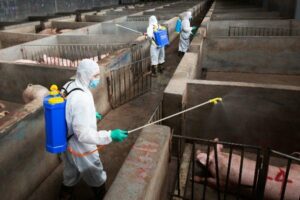
Pig pen cleaning and disinfection is one of the most important measures to protect livestock from disease outbreaks.
A proper procedure should always include: waste removal, washing with water and soap, drying, disinfectant application, and downtime before restocking.
Following these steps correctly helps reduce pathogen pressure, improve herd health, and enhance overall farm productivity.
Farmers can learn more and explore related products here. See more: …
 Share: