



AFRICAN SWINE FEVER (ASF): A MAJOR THREAT TO PIG FARMING AND EFFECTIVE DISEASE PREVENTION SOLUTIONS
In recent years, African Swine Fever (ASF) has become one of the most dangerous diseases affecting the pig farming industry worldwide. Not only does the disease cause severe economic losses, but it also directly impacts production scale, pork supply, and the livelihoods of millions of livestock farmers.
The major concern about African Swine Fever is its rapid transmission ability, the high survival rate of the virus in the environment, and the fact that there is still no specific treatment available. Therefore, understanding the causes, symptoms, and prevention methods is essential for farmers to proactively protect their pig herds.
What is African Swine Fever (ASF)?
African Swine Fever (ASF) is a highly contagious and dangerous infectious disease caused by the ASF virus (ASFV). The virus mainly affects members of the pig family, including domestic pigs and wild boars, and does not infect humans.
Although African Swine Fever does not spread to humans, its impact on pig herds is extremely serious. Once the virus enters a farm, the disease can spread rapidly, causing large numbers of pigs to die or requiring culling measures to control the outbreak.
ASF can affect pigs of all ages, including:
- Suckling piglets
- Weaned piglets
- Fattening pigs
- Breeding sows
- Boars
Therefore, ASF is considered one of the biggest challenges facing the pig farming industry today.
Causes of African Swine Fever
The cause of the disease is the ASF virus (African Swine Fever Virus). This virus can survive for long periods in the environment and is difficult to control without strict hygiene and disinfection practices.
ASF virus can exist in:
- Feces and urine of infected pigs
- Blood and secretions from infected pigs
- Pig housing areas
- Pig farming equipment
- Farmers’ clothing and footwear
- Pig transportation vehicles
- Contaminated feed
Common Transmission Routes of ASF
Direct transmission between infected and healthy pigs
Healthy pigs can become infected through direct contact with infected animals via:
- Saliva
- Nasal secretions
- Feces
- Urine
- Blood
Just one infected pig in a herd can become a dangerous source of transmission.
Transmission through humans
Farm workers can unintentionally bring the virus into pig farms through:
- Hands and feet
- Clothing
- Footwear
- Working tools
This is one of the common reasons why outbreaks occur even when farms do not introduce new pigs.
Transmission through transportation and pig trading
The transportation of pigs, feed, or farming equipment without proper hygiene measures can allow the virus to spread to other areas.
Symptoms of African Swine Fever That Should Be Detected Early
Early detection of ASF symptoms in pigs helps farmers take timely action and reduce losses.
Depending on the virus strain and its severity, symptoms may vary.
1. High fever and loss of appetite
This is often one of the first signs:
- Fever above 40°C
- Reduced activity
- Lying down frequently
- Loss of appetite or reduced feed intake
- Rapid weight loss
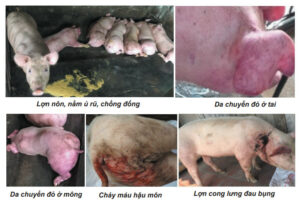
2. Signs of hemorrhage
Some infected pigs may show:
- Purple or bluish skin
- Red spots or bleeding areas on ears, abdomen, and legs
- Cold skin and progressive weakness
3. Digestive problems
ASF-infected pigs may experience:
- Diarrhea
- Vomiting
- Bloody stools
- Dehydration
4. Sudden death
In acute cases, the disease progresses very quickly. Pigs may die within a few days after symptoms appear.
If multiple pigs show fever, stop eating, and die continuously, farmers should suspect the risk of African Swine Fever.
Can African Swine Fever Be Treated?
One of the most common questions among pig farmers is:
“Can pigs infected with African Swine Fever be cured?”
Currently, there is no specific medicine that can completely eliminate the ASF virus from infected pigs.
Supportive treatments may only help to:
- Reduce secondary bacterial infections
- Improve pig resistance
- Provide care in mild cases
However, when ASF spreads widely within a herd, the risk of death and further transmission remains very high.
Therefore, for African Swine Fever, the most important approach is:
Active prevention – early detection – rapid disease control.
Effective Prevention Methods for African Swine Fever in Pig Farms
1. Apply strict biosecurity practices
This is the most important solution to reduce ASF risks.
Farmers should:
- Limit access of outsiders to pig farming areas
- Set up disinfection areas before entering barns
- Use dedicated clothing when handling pigs
- Clean feeders and drinkers regularly
- Disinfect pig housing periodically
2. Control the source of newly introduced pigs
When purchasing breeding pigs or replacement pigs, farmers should:
- Choose reputable suppliers
- Check the health status of pigs
- Quarantine new pigs before mixing with the herd
- Monitor them during the quarantine period
Introducing pigs from unknown sources is one of the major risks leading to disease outbreaks.
3. Manage feed and water properly
To reduce the risk of virus entry through digestion:
- Do not use untreated leftover food
- Do not feed pigs unsafe meat products
- Store feed in dry and clean conditions
- Ensure a clean water supply
4. Vaccination according to veterinary guidance
Currently, several ASF vaccines have been researched and deployed in some regions.
However, vaccine use must follow:
- Correct target animals
- Appropriate age
- Proper technical instructions
- Combination with biosecurity measures
What Should Farmers Do When ASF Is Suspected?
If pigs show signs of suspected ASF infection, farmers should:
Step 1: Immediately isolate sick pigs
Prevent suspected pigs from contacting healthy animals.
Step 2: Do not sell or transport sick pigs
Moving or slaughtering infected pigs can cause the virus to spread further.
Step 3: Disinfect the farming area
Clean and disinfect:
- Pig barns
- Equipment
- Walkways
- Surrounding areas
Report the situation to receive proper guidance and disease control measures.
Why Is African Swine Fever Dangerous for Pig Farmers?
ASF causes serious impacts because:
- It has a high mortality rate
- There is no specific treatment
- The virus survives for a long time in the environment
- Disease prevention costs are high
- It reduces the value of pig herds
For large-scale farms, a single outbreak can cause losses of hundreds of millions to billions of Vietnamese dong if not controlled quickly.
African Swine Fever (ASF) remains one of the biggest threats to the pig farming industry today. Although there is currently no complete treatment method, farmers can significantly reduce risks by applying strict disease prevention procedures.
A healthy pig farm starts with proper management from the beginning: safe breeding stock, clean housing, strict disease control, and proactive prevention every day.
Farmers can learn more and explore related products here. See more: …
 Share: