


Nội dung chính
- ACUTE HEPATOPANCREATIC NECROSIS DISEASE (AHPND) IN SHRIMP: CAUSES, SYMPTOMS, AND EFFECTIVE PREVENTION
ACUTE HEPATOPANCREATIC NECROSIS DISEASE (AHPND) IN SHRIMP: CAUSES, SYMPTOMS, AND EFFECTIVE PREVENTION
In today’s shrimp farming industry, Acute Hepatopancreatic Necrosis Disease (AHPND), also known as Early Mortality Syndrome (EMS), is one of the most serious diseases causing significant economic losses for shrimp farmers.
The disease can lead to mass shrimp mortality during the early stages of the farming cycle, severely affecting productivity and profitability.
Understanding the causes, symptoms, and preventive measures of AHPND helps farmers proactively manage risks and improve shrimp survival rates.
What is Acute Hepatopancreatic Necrosis Disease (AHPND)?
Acute Hepatopancreatic Necrosis Disease (AHPND) is a highly infectious disease affecting cultured shrimp, particularly Pacific white shrimp (Litopenaeus vannamei) and black tiger shrimp (Penaeus monodon).
The disease severely damages the hepatopancreas, a vital organ responsible for digestion, nutrient absorption, and energy metabolism.
The primary causative agent is the bacterium Vibrio parahaemolyticus carrying the PirA and PirB toxin genes.
Once inside the shrimp, these bacteria produce toxins that destroy hepatopancreatic cells, causing rapid deterioration of shrimp health.
AHPND most commonly occurs 10–45 days after stocking, especially in ponds with unstable environmental conditions.
Causes of Acute Hepatopancreatic Necrosis Disease in Shrimp
Several factors contribute to the development of AHPND, including:
1. Infected Shrimp Seed
Shrimp post-larvae that are not properly screened may carry disease-causing bacteria into the pond from the beginning of the production cycle, leading to rapid disease outbreaks.
Farmers should purchase shrimp seed from reputable hatcheries with health certifications and PCR testing for major diseases.
2. Poor Water Quality
Polluted pond water creates favorable conditions for the growth of Vibrio bacteria.
Common risk factors include:
- High ammonia (NH₃) and hydrogen sulfide (H₂S) levels.
- Excess organic matter in pond sediments.
- Low dissolved oxygen (DO).
- Large fluctuations in pH.
- Unstable alkalinity.
Environmental stress weakens shrimp immunity, making them more susceptible to infection.
3. Overstocking
High stocking densities combined with poor management can result in:
- Increased organic waste.
- Oxygen competition.
- Rapid proliferation of harmful bacteria.
- Faster disease transmission.
4. Improper Feeding Management
Overfeeding leaves uneaten feed in the pond, providing nutrients for Vibrio bacteria to multiply.
Additionally, poor-quality feed can weaken shrimp digestive health and immune function.
Symptoms of Acute Hepatopancreatic Necrosis Disease
Farmers can identify AHPND through several characteristic signs.
1. Reduced Feeding or Loss of Appetite
This is usually one of the earliest symptoms.
Shrimp consume less feed, and leftover feed remains in the feeding trays.
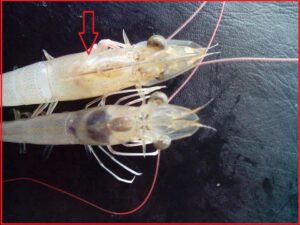
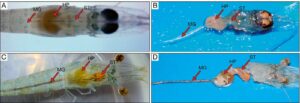
2. Damaged Hepatopancreas
Affected shrimp often exhibit:
- Pale hepatopancreas.
- Soft and shrunken hepatopancreas.
- Poor distinction between the hepatopancreas and intestine.
These are key indicators of AHPND.
3. Slow Growth and Weakness
Infected shrimp typically:
- Swim sluggishly.
- Show reduced activity.
- Have soft shells.
- Grow more slowly than healthy shrimp.
4. Rapid Mortality
Without timely intervention, AHPND can cause high mortality within just a few days, especially in young shrimp.
Effective Prevention of Acute Hepatopancreatic Necrosis Disease
Currently, there is no specific treatment capable of completely eliminating AHPND. Therefore, preventive management remains the most effective strategy.
1. Select High-Quality Shrimp Seed
- Purchase seed from reputable hatcheries.
- Screen shrimp for pathogens before stocking.
- Choose healthy and uniform post-larvae.
2. Proper Pond Preparation
Before each production cycle:
- Clean and disinfect the pond bottom.
- Remove accumulated sludge.
- Treat and disinfect incoming water.
- Stabilize key water quality parameters.
Proper pond preparation helps reduce harmful bacterial populations.
3. Monitor Water Quality Regularly
Farmers should routinely monitor:
- pH.
- Alkalinity.
- Dissolved oxygen.
- Salinity.
- NH₃ and H₂S concentrations.
Maintaining stable water quality reduces stress and strengthens shrimp immunity.
4. Improve Shrimp Health Through Nutrition
Recommended supplements include:
- Vitamins.
- Minerals.
- Probiotics.
- Environmental biological products.
These supplements help improve shrimp resistance against disease-causing pathogens.
What Should You Do If AHPND Is Suspected?
If AHPND is suspected, farmers should:
- Check all water quality parameters.
- Reduce feeding if shrimp lose their appetite.
- Increase aeration to improve dissolved oxygen.
- Apply suitable probiotics.
- Collect shrimp samples for laboratory testing to confirm the diagnosis.
Avoid indiscriminate or prolonged use of antibiotics, as this may contribute to antimicrobial resistance and negatively affect seafood quality.
Acute Hepatopancreatic Necrosis Disease (AHPND) remains one of the greatest challenges facing the shrimp farming industry. Without early detection and proper management, the disease can significantly reduce production and profitability.
The most effective way to minimize losses is to implement strong biosecurity practices, use high-quality shrimp seed, maintain stable pond water conditions, and improve shrimp health throughout the production cycle.
A proactive disease prevention strategy is essential for reducing risks, improving farm productivity, and ensuring the sustainable development of shrimp aquaculture.
Farmers can learn more and explore related products here. See more: …
 Share: