


MINERALS AND NUTRITION IN AQUACULTURE: A SOLUTION FOR HEALTHY SHRIMP AND FISH GROWTH
In modern aquaculture, maintaining the health and growth performance of shrimp and fish depends not only on feed quality but also on nutritional balance, water quality management, and the ability of aquatic animals to adapt to environmental changes.
Among essential nutrients, aquaculture minerals and nutritional supplements play an important role in supporting body development, improving natural resistance, helping shrimp and fish recover from stress, and increasing overall farming efficiency.
In intensive farming systems with high stocking densities, natural mineral sources available in ponds may not fully meet the nutritional requirements of aquatic animals.
Therefore, farmers should focus on proper nutritional supplementation combined with effective pond management practices to maintain healthy shrimp and fish populations and achieve sustainable farming results.
The Importance Of Minerals For Shrimp And Fish
Minerals are essential nutrients involved in many physiological processes of aquatic animals, including body structure formation, metabolism, osmoregulation, and immune system support.
For shrimp, minerals are especially important during the molting process and new shell formation. For fish, minerals support bone development, growth performance, and normal body functions.
Providing sufficient essential nutrients helps shrimp and fish develop more consistently, improve adaptability, and reduce the negative effects caused by environmental fluctuations.
Benefits Of Proper Mineral And Nutritional Supplementation
Supporting Shrimp Molting And Shell Formation
Molting is one of the most important stages in the shrimp growth cycle. During this period, shrimp require adequate minerals to form a new shell and recover quickly after molting.
Proper mineral supplementation helps:
- Support new shell formation.
- Improve recovery after molting.
- Reduce prolonged soft-shell problems.
- Enhance shrimp survival during sensitive growth stages.
A balanced supply of minerals helps shrimp complete the molting process more effectively and maintain stable development.
Enhancing Immunity And Stress Resistance
Aquaculture environments are constantly affected by weather changes, water quality fluctuations, and farming density. These factors can cause stress and reduce the health condition of shrimp and fish.
Essential nutrients such as minerals, vitamins, and amino acids support important biological functions, improve environmental adaptation, and strengthen the natural defense system of aquatic animals.
Healthy shrimp and fish are better able to withstand environmental challenges and maintain stable growth throughout the farming cycle.
Supporting Growth Performance And Farming Efficiency
A balanced nutrition program helps shrimp and fish absorb nutrients more efficiently, achieve better growth rates, and improve production performance.
Proper nutritional supplementation contributes to:
- Better feed utilization.
- Stable weight gain.
- More uniform growth within farming populations.
- Improved farming efficiency.
Providing adequate nutrients is an important factor in reducing production risks and improving economic returns for farmers.
Helping Shrimp And Fish Recover From Environmental Stress
During the farming process, shrimp and fish may experience stress caused by various environmental factors, including:
- Heavy rainfall and sudden changes in water conditions.
- Prolonged high temperatures.
- Changes in salinity and pH levels.
- Transportation or pond transfer.
During these stressful periods, proper nutritional support helps aquatic animals recover faster, stabilize physiological functions, and maintain better health.
Signs Of Mineral Or Nutritional Deficiency In Aquatic Animals
Farmers should regularly monitor shrimp and fish conditions to identify early signs of mineral or nutritional deficiencies.
Common signs include:
- Soft-shell shrimp after molting.
- Uneven molting.
- Slow growth.
- Reduced feeding activity.
- Weak movement and low activity.
- Changes in body color.
- Increased mortality rates.
- Poor growth performance in fish.
When these symptoms appear, farmers should evaluate overall farming conditions, including water quality, feeding management, and nutritional balance.
Important Minerals In Aquaculture
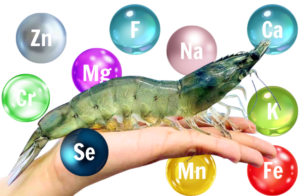
Calcium (Ca)
Calcium is an essential mineral for shrimp shell formation, body structure development, and maintaining important physiological activities.
For shrimp farming, calcium plays a key role in supporting shell hardness and recovery after molting.
Magnesium (Mg)
Magnesium participates in various metabolic processes, supports enzyme activity, and helps maintain mineral balance in aquatic animals.
Adequate magnesium levels contribute to better growth and normal physiological functions.
Potassium (K)
Potassium plays an important role in regulating water balance and electrolyte balance in aquatic animals.
It is especially important for shrimp and fish raised in environments where salinity conditions may fluctuate.
Other Trace Minerals
Besides major minerals, trace minerals such as zinc, manganese, and iron are also required in appropriate amounts to support metabolism, growth, and overall development.
Although needed in smaller quantities, these minerals contribute significantly to maintaining healthy aquatic animals.
When Should Aquatic Animals Receive Nutritional Supplements?
Farmers should consider increasing nutritional support during important stages of the farming cycle.
During Rapid Growth Periods
During rapid growth stages, shrimp and fish have higher nutritional requirements to support body development and improve growth performance.
Before And After Shrimp Molting
Before and after molting, shrimp need sufficient nutrients to support new shell formation, recovery, and continued growth.
After Environmental Changes
Following heavy rainfall, temperature fluctuations, or sudden changes in pond conditions, nutritional support helps aquatic animals adapt and recover more effectively.
When Shrimp And Fish Show Health Decline
When shrimp and fish show reduced feeding activity, slow growth, or weakness, farmers should identify possible causes and apply suitable nutritional solutions.
Effective Aquaculture Care Solutions For Healthy Shrimp And Fish
To achieve successful and sustainable aquaculture production, farmers should combine several important management strategies:
- Provide balanced and complete nutrition.
- Maintain stable water quality.
- Apply nutritional supplements according to growth stages.
- Reduce environmental stress factors.
- Use reliable aquaculture support solutions from trusted sources.
The combination of proper nutrition, effective pond management, and health care practices helps improve survival rates, enhance productivity, and support long-term sustainable farming.
Minerals and nutrition play a vital role in shrimp and fish growth, development, and overall health maintenance.
Proper mineral supplementation for shrimp and fish helps aquatic animals adapt better to environmental changes, supports successful molting, improves growth performance, and increases farming efficiency.
Along with balanced nutrition, farmers should apply suitable aquaculture management solutions and maintain stable pond conditions to build a safe, effective, and sustainable production system.
Farmers can learn more and explore related products here. See more: …
 Share: