


AQUACULTURE MANAGEMENT: SOLUTIONS FOR RESPONDING TO SEASONAL CLIMATE VARIABILITY
Climate change and seasonal weather fluctuations are becoming major challenges for the aquaculture industry. Unstable temperatures, prolonged heavy rains, droughts, and strong storms all directly affect water quality, pond ecosystems, aquatic animal health, and production efficiency for farmers.
In continuously changing environmental conditions in aquaculture, factors such as dissolved oxygen, pH, salinity, and toxic gas levels in ponds can easily become imbalanced. This causes fish and shrimp to become stressed, grow slowly, and become more susceptible to disease outbreaks. This not only reduces productivity but also leads to significant economic losses.
Therefore, proactively managing ponds and applying seasonal adaptation solutions in aquaculture is an important factor that helps farmers reduce risks, stabilize the water environment, improve productivity, and move toward long-term sustainable development.
1. Impact of temperature fluctuations on aquaculture
Cold season: Reduced feeding and slow growth in fish
When water temperature drops, the metabolic processes of fish and shrimp slow down. This leads to reduced feed intake, slower growth, and weakened immune systems.
In prolonged cold conditions, especially in areas with sudden temperature drops, dissolved oxygen levels in water can decrease significantly, causing oxygen deficiency and increasing mortality rates.
Cold-season management solutions:
- Reduce feed according to actual feeding behavior of fish
- Monitor water temperature daily
- Maintain stable pond water levels to minimize temperature fluctuations
- Use paddle wheels or aeration systems to increase dissolved oxygen
- Supplement vitamins and minerals to enhance resistance
Hot season: Heat stress and oxygen depletion risks
High temperatures increase the oxygen demand of fish. However, warm water contains less dissolved oxygen, leading to oxygen imbalance in ponds. This is a common cause of surface swimming behavior, heat stress, or mass mortality.
In addition, hot weather promotes strong algal growth, easily leading to algal blooms and sudden pH fluctuations.
Hot-season response solutions:
- Increase aeration, especially at night and early morning
- Feed during cooler times of the day
- Reduce feed when fish show signs of stress
- Regularly monitor dissolved oxygen, pH, and temperature
- Avoid overfeeding to prevent water pollution
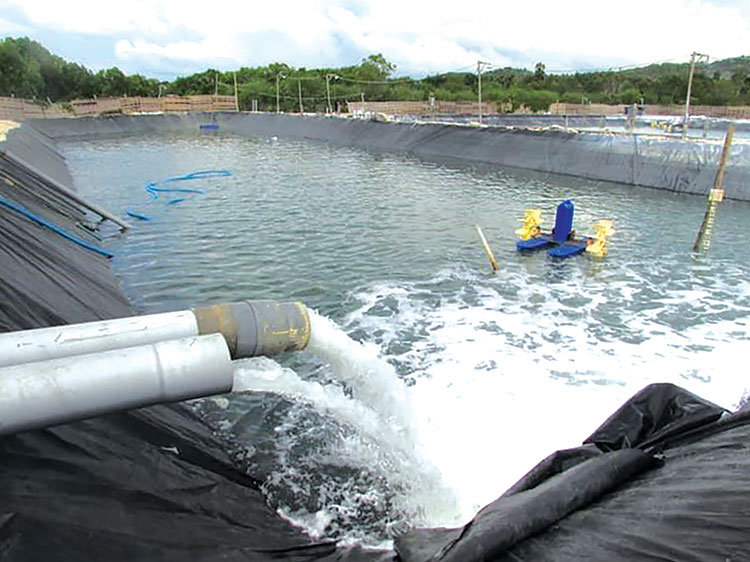
Aquaculture pond systems need to be carefully managed for temperature and oxygen to ensure proper growth of fish and shrimp.

2. Rainfall variability and its impact on ponds
Rainy season: Water quality deterioration
Prolonged heavy rainfall can suddenly change water parameters such as pH, salinity, alkalinity, and temperature. At the same time, rainwater and runoff from surrounding areas may introduce:
- Mud and sediment
- Organic matter
- Agricultural chemicals
- Pathogens
These factors destabilize the pond environment, causing stress and disease outbreaks in fish.
Rainy-season management solutions:
- Reinforce pond embankments and drainage systems
- Install barriers to prevent overflow
- Check pH after heavy rain
- Use probiotics to stabilize water quality
- Perform partial water exchange when necessary
Dry season: Risk of drought and algal blooms
During the dry season, reduced water volume leads to higher stocking density. Organic matter, toxic gases, and nutrients become concentrated, creating favorable conditions for algae growth.
If not properly controlled, algal blooms can reduce dissolved oxygen and produce toxins harmful to aquatic animals.
Dry-season solutions:
- Maintain appropriate water levels
- Regularly siphon pond bottoms to remove waste
- Control feeding amounts
- Increase aeration using paddle wheels
- Monitor algae density and parameters such as NH₃ and NO₂
Proper water quality and algae control help maintain stable aquaculture operations throughout both rainy and dry seasons.

3. Effects of strong winds, storms, and cloud cover
Extreme weather events such as storms, tropical depressions, or strong winds can cause:
- Wave action damaging pond embankments
- Power outages affecting aeration systems
- Water column mixing leading to bottom oxygen depletion
- Stress in fish due to sudden environmental changes
Prolonged cloud cover also reduces photosynthesis in algae, thereby decreasing dissolved oxygen levels in water.
Preventive measures:
- Prepare backup generators
- Strengthen pond embankments and aeration systems
- Reduce feeding before storms or heavy rain
- Continuously monitor dissolved oxygen
- Harvest early if severe weather is expected
A strong cage system is also a key solution to protect aquaculture areas during strong winds and tropical depressions.

Key principles to reduce seasonal stress in fish
Most weather fluctuations cause stress in aquatic animals. When fish or shrimp are stressed, their immunity decreases significantly, increasing disease risks. Therefore, farmers must minimize stress factors as much as possible.
Key principles to apply:
Reduce feed intake
When fish reduce feeding, adjust the ration accordingly to avoid waste and metabolic stress.
Limit handling and movement of fish
Harvesting or transportation during adverse weather can cause shock and increase mortality.
Reduce stocking density
High density leads to faster oxygen depletion and faster disease spread.
Regularly monitor water quality
Important parameters include:
- Dissolved oxygen (DO)
- pH
- Temperature
- Alkalinity
- NH₃, NO₂
- Salinity
Aquaculture management under seasonal climate variability requires farmers to proactively and continuously monitor environmental factors and promptly adjust farming techniques accordingly. Controlling water temperature, rainfall impacts, salinity, dissolved oxygen (DO), and other water quality indicators not only reduces stress in aquatic animals but also minimizes disease risks, thereby improving survival rates and productivity.
In addition, aquaculture farmers need to apply integrated management measures such as adjusting feeding rates according to weather conditions, increasing aeration when oxygen levels drop, and periodically treating pond environments to maintain a stable ecosystem. These solutions help optimize economic efficiency and reduce risks during production.
In the context of increasingly complex and unpredictable climate change, adopting flexible, scientific, and sustainable aquaculture management solutions will be a key factor in helping the industry develop steadily, adapt well to natural conditions, and enhance long-term value for farmers.
 Share: