


African Swine Fever and Effective Prevention Solutions
African Swine Fever (ASF) continues to develop in a complicated manner in Vietnam. The situation and spread of African Swine Fever are receiving special attention from pig farmers because pig farming is one of the country’s key livestock industries. De Heus would like to provide farmers with important information about the dangers of African Swine Fever and effective prevention measures so that farmers can proactively protect their pig herds from this dangerous disease.
AFRICAN SWINE FEVER OVERVIEW
African Swine Fever is a contagious disease caused by a DNA-containing Myxovirus.
The disease can appear in several forms: peracute, acute, chronic, and atypical.
The morbidity and mortality rates are extremely high, reaching up to 100%.
Typical symptoms include skin discoloration and bruising over most parts of the body, widespread hemorrhagic inflammation in the digestive tract, lymph nodes, and kidneys.
Once the disease occurs, it can become an epidemic and persist for many years.
The virus has very strong survival ability:
- In blood: up to 6 years (under refrigeration)
- In spleen tissue: 2–2.5 years
- In moist feces: 122 days
- In urine: 45 days
The virus is sensitive to disinfectants such as:
- Formalin 2%
- NaOH 3–4%
- Other farm disinfectants
EPIDEMIOLOGICAL CHARACTERISTICS
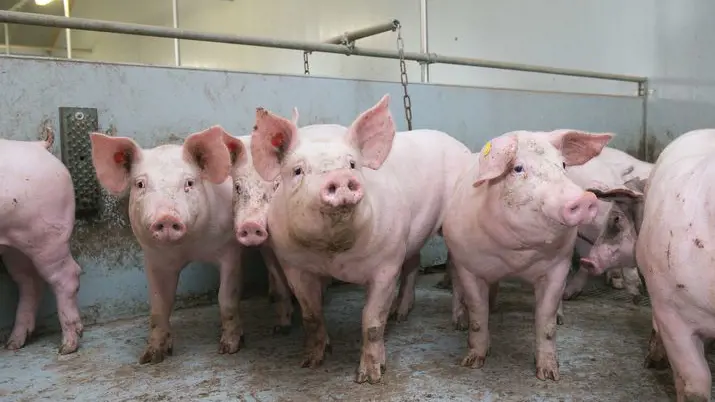
- Both domestic pigs and wild boars can be infected.
- Free-range pigs are more susceptible due to greater exposure to feces and urine.
- The disease can occur year-round.
- Pigs of all ages are susceptible.
CLINICAL SIGNS
Incubation Period
The incubation period ranges from 5–10 days.
Symptoms
- High fever of 41–42°C lasting continuously for about 4 days while pigs may still appear normal initially.
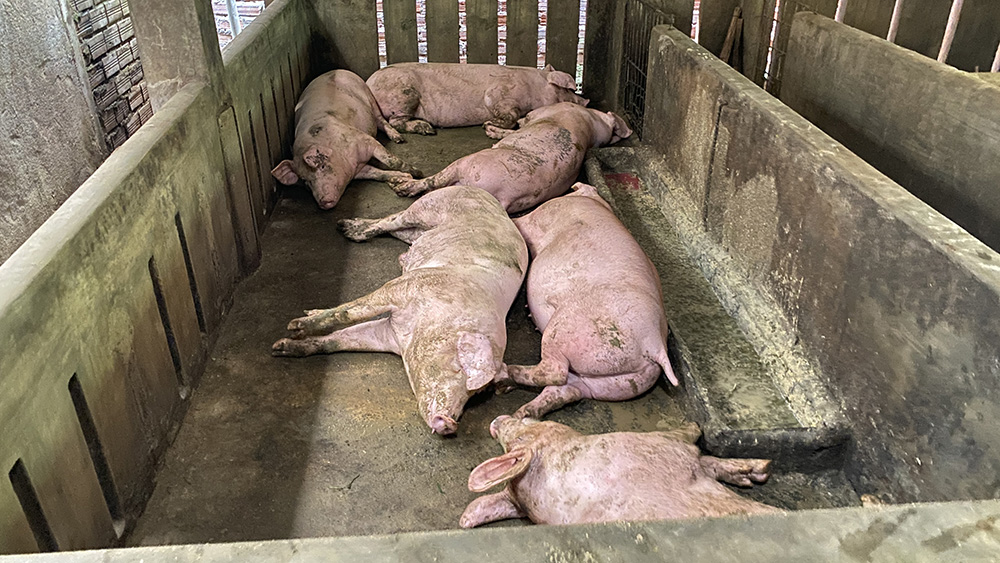
- Afterwards, pigs become depressed, lethargic, weak, coughing, and experience difficulty breathing.
- Trembling, unsteady gait, piling together, and abortions in sows may occur.
- Hemorrhagic skin lesions and bluish-purple discoloration appear on the ears, groin, abdomen, inner thighs, and legs, eventually leading to necrosis.
LESIONS
- Bleeding from natural openings such as the nose, mouth, and anus.
- Hemorrhages in the heart muscle and around the heart.
- Enlarged spleen with hemorrhage and infarction.
- Enlarged liver with hemorrhage.
- Hemorrhhagic lungs; trachea and bronchi filled with foam.
- Hemorrhage in the stomach.
- Hemorrhage in both the small and large intestines.
- Hemorrhagic kidneys.
- Edematous and hemorrhagic bladder.
- Swollen and hemorrhhagic lymph nodes.
EFFECTIVE PREVENTION SOLUTIONS
- Strengthen disinfection procedures both inside and outside pig houses, including pathways, truck weighing areas, surrounding farm zones, and dead pig disposal areas.
- Entry and exit gates must have disinfectant pits and disinfectant spraying systems. Each barn entrance should have disinfectant trays or pits, and the disinfectant solution must be changed daily.
- Vehicles entering the farm such as pig transport trucks, feed delivery trucks, and motorcycles must be thoroughly disinfected before entering.
- Limit employees from leaving the farm unless absolutely necessary. Restrict visitors as much as possible. Anyone entering the farm must go through a sanitation area, shower with soap, and undergo at least 24 hours of isolation before accessing the pig houses.
- Improve pig herd management and care. Vaccinate pigs against viral diseases such as Classical Swine Fever, PRRS (Blue Ear Disease), Foot-and-Mouth Disease, Pseudorabies, and Circovirus to enhance overall immunity. Additional supplements such as Vitamin C, B-complex vitamins, and beta-glucan may also help strengthen resistance.
- Purchase pigs only from reliable and traceable sources. Newly introduced pigs must be kept in separate quarantine areas for health monitoring and proper import procedures. Monitor the health status of the entire herd daily to ensure timely response if ASF is suspected.
- Implement effective control measures against insects and rodents. Do not allow dogs, cats, chickens, ducks, or other animals to enter pig farms.
 Share: